Showing posts with label lit events. Show all posts

Tuesday, April 19, 2011

Housing Works Bookstore Cafe: my new favorite place in the city

Much like discovering a new band, I am amazed when I happen upon a new locale in the city that fits me so well, and wonder how I had gone so long in ignorance of it. In a place like this, and with my penchant for exploring it so readily and often, this of course happens all the time. Still, it is no less surprising to enter a place like Housing Works and wonder how I'd managed never to go there before.

For those of you who don’t know, Housing Works is a national organization dedicated to improving the lives of individuals stricken with HIV/AIDS and homelessness—and too often both. It serves this community through advocacy, services, and entrepreneurial business. This third pillar—which in New York City you’ll encounter as the Housing Works Thrift Shops and the Housing Works Bookstore Café—brings in 25% of the organization’s operating budget. At the Bookstore, every used book or café snack purchased is a donation, and all the employees are volunteers. And not only is the Bookstore a hip space that supports a great cause with a well-organized selection of donated books and music, but they are also a hub for artistic and cultural events.

And that, after all, is why I finally dropped by. With a Tuesday evening free, I opted for a poetry reading celebrating National Poetry Month. The National Book Foundation had hosted a discussion on contemporary poetry’s (and poets’) enduring place in American culture, and on following evening they actually presented three poets to share their work and thoughts: Mark Doty, Kathleen Graber, and Patricia Smith.

As I sat with a coffee and cookie, I considered how often I had gone to these type of events in college, and how I hadn’t attended a literary event in some time. Then I realized that I had gone to a book talk just the week before. I’d met Tim at the Union Square Barnes & Noble to hear one of our modern heroes speak about his latest book: Jeremy Wade, the English journalist/biologist/angler who hosts the television show “River Monsters,” and recently released a book of fish tales under the same title. If you haven’t seen a second of “River Monsters” then you are either watching the crap some consider “television,” or actually living a productive, fruitful life. Either way, you’re wasting your time and missing out on one of the greatest programs ever recorded. In each episode, Mr. Wade investigates the story of an especially dangerous or large freshwater fish. He then travels to exotic locations, interrogates local fisherman, and doggedly attempts to catch the suspected fish. Apparently, my ten-year-old cousin is hooked on the show as much as us, so Tim picked up copy of the book and got it signed for the boy. Of course, we’ll first read the book before he receives it as a gift.    

And on a sad note, it pains me to say that my own river monster, my beta fish G.O.B. has passed on. For two years, the feisty fish was my erstwhile roommate, enduring all my moods and proclivities through thick and thin, i.e. his water and my room’s available light. However, beginning tomorrow, I will take on a new companion with a temperament to match his name, George Michael (the “Arrested Development” character, not the singer-songwriter.)

But, back to the poetry. Kathleen Graber read lyrical poems concerning writing itself and other literary allusions, while Mark Doty read poetry with a more quotidian and modern bent. And, ailing from Bell’s palsy, Patricia Smith—a champion slam poet—stridently read poems steeped in the history of Chicago and her family’s origins. Mr. Doty had an interesting reading style, but it was unfortunate that Ms. Smith could not read as well as she normally could, for although her poems had a energy and potency in their words alone, I really would have liked to have heard her perform to her fullest extent (as I’m sure she would have, too.)

In the question-and-answer session after the reading, the poets discussed what writers and critics had the evening before: the place of poetry in modern culture and vis-à-vis the public at large. Political intentions and accessibility were mentioned, and the poets defended their art as confronting issues that required thought, that could not be reduced to a sound bite. Essentially, if you want someone to think about the complexities of an issue that is not as simple as it seems, then you should explore and present it in a manner that requires the active exertion of thought to unpack and digest it. The poet should not make their art too difficult or inaccessible to most readers (just because they can) lest the poem fail to be effective.

Before the evening concluded, Mr. Doty suggested (partly in jest, but with a good dose of earnestness) that modern health care should include a literary therapist—and not just to provide an occupation to unemployed English majors. It could greatly benefit individuals if there was some guidance in what they read, if only there was a source that could suggest to them works and authors that could relate to their personal issues and experiences. As I finish this post, I realize I might just have a few more things to say about poetry—especially considering that I’ll being going back to the Housing Works Bookstore for another poetry reading tomorrow, er, tonight. See? A cool place that’s worth returning to weekly, and patronizing just as often.

And speaking of which, what did I pull from the stacks of used books to add to my personal collection? Vinyl records, of course. I know, I know, but c’mon … George Gershwin playing "Rhapsody in Blue," a recording of Mussorgsky’s “Night on Bald Mountain,” and a song called “Danse Macabre” recorded fifty years ago by none other than the New York Philharmonic—how could I pass this stuff up?

Yeah, I know ... a photo of an album is like writing about jazz--it just doesn't convey the listening experience.

Wednesday, November 17, 2010

Talking with Mr. Winchester

It’s not every day you meet one of your literary heroes.  But for me that day was last Wednesday.  And it’s even less likely that you actually correspond with said hero, and discuss with him an idea you have for a project inspired by one of his books—and receive an encouraging reply.  But I’m getting ahead of myself.

The author of such works as Krakatoa, The Map That Changed the World, The Professor and the Madman, Simon Winchester writes of all things I love: history, geology, travel, etc.  He pursues fascinating stories—and all the tangents that emanate.  Basically, he’s the (authentically) English Bill Bryson.  And if I can’t be the next John McPhee, then the next Simon Winchester would surely suffice. 

At the Upper East Side Barnes & Noble last week, Mr. Winchester shared with his far-too small audience, just four stories pertaining to his latest book, Atlantic: Great Sea Battles, Heroic Discoveries, Titanic Storms, and a Vast Ocean of a Million Stories.  For nonfiction authors, I prefer this approach; the reading/interview format seems only appropriate for fiction writers, with their “creative process” and whatnot.  Essentially, his anecdotes covered the range of stories from a vast book about a vaster ocean: from the origins of his idea to write a biography of an ocean, to the odd rituals of the Viking-descended Faroe Islanders; from the isolated island in the South Atlantic that banned Mr. Winchester from visiting, to a shipwreck and heroic rescue on the Skeleton Coast of Africa.  Entertaining, and often humorous, Mr. Winchester’s stories provided a glimpse into his travels, his discursive and tangential style, and how a book eventually accumulates.

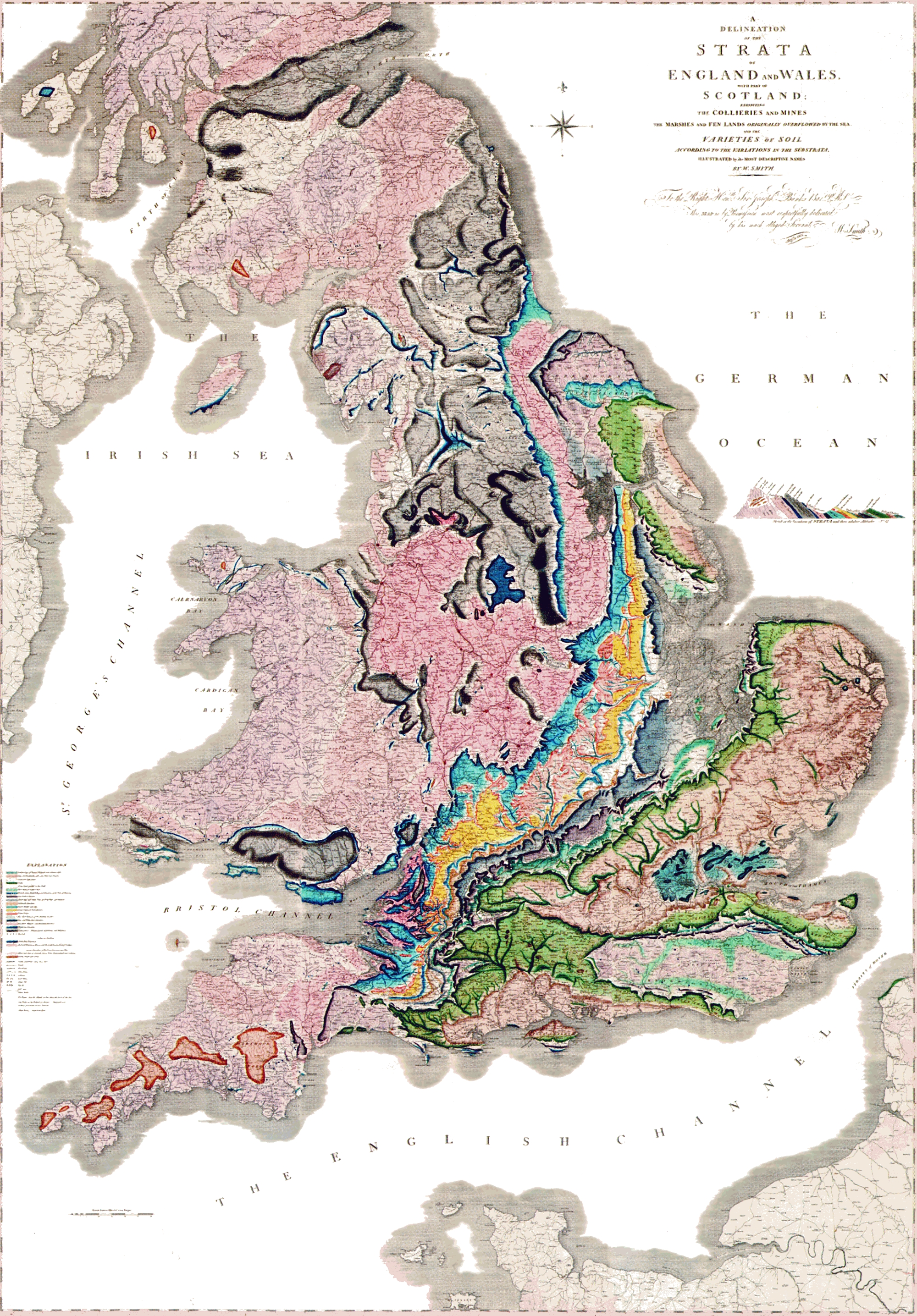
After a few less-than provocative questions, Simon Winchester took a seat for some book signing.  Now, when I saw him at a reading at Washington, D.C.’s Politics and Prose bookstore several years ago, I mentioned to him that while in London I had actually seen the subject of the book, The Map That Changed the World—William Smith’s 1815 geologic map of Great Britain.  It was a good talking point then, but … now I had no in. 

However, besides the copy of Atlantic I bought that night, I also carried with me a copy of Krakatoa—in which Mr. Winchester chronicles the 1883 eruption, geologic origins, and historical impact of this infamous Indonesian volcano.  Within a chapter on an Islamic uprising in Java in the wake of the eruption (and perhaps even initiated by the resulting turmoil), Winchester mentions the story of Eduard Douwes Dekker (no relation; none of my grandmothers were Dutch).  As a colonial official in the Dutch East Indies of the 1850s, Dekker witnessed administrative corruption—in both the personalities involved and in the bureaucratic system itself.  But the actual abuse and mistreatment of the natives compelled him to confront his bosses and, ultimately, to write a novel.  Dekker’s Max Havelaar, with it meta-narrative structure and overt autobiographical nature, portrays what he’d seen in just three months assisting the administration of coffee plantations not far from the island that would explode decades later.  His book was controversial of course, especially as it exposed the cruelties of the colonial system to an ignorant (perhaps willfully) Dutch public.  Needless to say, Dekker did not become popular in Holland, though he did become one of the nation’s best writers.  And eventually, Max Havelaar prompted the Dutch government to reform its colonial polices—initiatives that eventually led to Indonesian independence (which actually took until after World War II), as well as the Fair Trade movement

Now, Simon Winchester devotes all of three pages to this story (which is a lot considering the density of information packed into his books).  But I saw the potential for an entire book based on those three pages—an account of Dekker’s life, experience in Java, and influential novel.  And so, I read Max Havelaar, learned more about its author, and even laid out a rough outline.  And then somewhere in there I lost the will to put any effort into the project.  This is not the first time this has happened.  (If I ever mentioned either the Warsaw Ghetto Uprising or anything about RFK to you, these projects, just for the record, are in the same state of incompletion.)  But, how often would I have the opportunity to ask the very person who inspired me for his thoughts on the project?  So, I did.  I mentioned my fascination with Dekker’s story, and he told me that since time and place did not allow for a proper discussion, I should send him an email.   I thanked him, and left with signed books and an email to write.

In that email, I thanked for the signatures and laid out my project proposal—mentioning that my research was only preliminary and my intended audience: cool, young adults  who are into being inspired to action by historical figures and their tales of creativity and self-sacrifice in order to stand up for what is right.  Perhaps that’s a tad specific, but why write for someone else?  And I concluded by seeking out any research leads, or even just recommendations on how a modern historian should approach/consider this era and region.  And with that, I sent off my note to a rather busy man. 

But a man of his word, as it turns out.  He told me he responds to nearly every email that comes to him through his website, and I received a reply a just a couple days later:

It seems an admirable, fascinating - but perhaps not financially terribly rewarding  - idea; and I for one would love to read such a book.

I have a friend in Leiden who is familiar with the subject and might provide some leads; and one has to assume there is a biography in Dutch, so its author, if around, would surely help you too.

But the decision you alone must make is: is it worthwhile? On all levels, that is; not just monetary. You just might find the whole thing so spiritually and intellectually fulfilling as to trump the financial risk.

Do let me know what you decide,

Simon W.

Terribly exciting, right?  The only thing that baffles me is why I haven’t jumped right into this project.  I mean, if Simon Winchester is my audience—then why not just go write it?  I don't know why, but I haven't.  I don't know why.  I don't know.