Showing posts with label writing. Show all posts

Tuesday, August 20, 2013

Craptacular writing day ... but you get a picture of an historic landmark

St. Patrick's Old Cathedral in the Lower East Side


The old church caught the dying light of day, but the ringing of its bells had caught Aedan’s attention. The cross was small, as if the building itself defined its purpose—this is a house of the Lord, you knew it and felt it without being told. The granite walls towered over the streets, but the tenements--rising with the stability and audacity of card houses--hemmed the cathedral in on all sides. The cleaner residents among them could be accepted as parishioners, but the majority could only accept the trickle of charity that leaked into the neighborhood. Aedan hadn’t entered the churchyard in years. When they moved downtown after Seamus returned from the War, his mother attempted to restructure their lives around the church. Aedan only remembered a few stories of the Bible ...


His father said she was buried there. Kyla believed this, and insisted on stopping outside the gates to greet their mother, ask her about heaven, cry a bit. But Aedan knew better. The man his father had paid to handle his mother’s body had no connection with St. Patrick’s, nor any parish. For all he knew, his mother had been dumped in the East River, and drifted out to sea just as easily as she’d come.

Wednesday, August 14, 2013

Where to (re)start? The Brooklyn Bridge novel redux

Charlotte lowered the revolver to her side. Aedan clutched at her hand and the gun slipped from it, clattering against the floor. The sound, more than his sudden movement, startled her; but Charlotte stood rooted the floorboards. She should have fled out of fear, but something held her there.
            Squeezing her hand tenderly, he pressed it against his chest—his heart—where a moment before she had aimed her weapon. She reached out her free hand and Aedan anticipated a slap across the side of his head. But rather, Charlotte caressed his ruddy cheek, the eyelets of her lace gloves catching on his stubble, producing a rasping sound heard only by him. But, when they passed just below his chin, her fingers curled into a small fist hidden from his sight.


Thursday, January 31, 2013

The Brooklyn Bridge novel

In the winter of 2010, I first heard about Isambard Kingdom Brunel--a kick-ass Victorian civil engineer with an equally kick-ass name. In the 1830s, 40s and 50s he constructed bridges and railways across England, designed the largest ship in the world, and assisted his father with the first tunnel under the Thames (or any river, for that matter.) This rather expensive tunnel was initially for pedestrians and tourists, and, of course, soon became home to a Dickensian cast of peddlers, pickpockets, and prostitutes. I thought, "Hey, that seems like an interesting setting for a play." But my uncle, Tim, reminded me about another fascinating sub-fluvial environment: the caissons beneath the bed of the East River during the construction of Brooklyn Bridge. Ah, now this had real potential.

Wednesday, December 5, 2012

Upon seeing The Twenty-Seventh Man at The Public


“Hm, that sounds like my kind of play,” I thought* immediately after reading a flattering review of Nathan Englander’s The Twenty-Seventh Man at The Public Theater. I think I may have even said this out loud to my roommates … or, at least, to the room. And I knew then that I would go see it, considering that I’m in a show-seeing mode (and that I could possibly get a ticket for relatively cheap.)

Monday, September 17, 2012

"this mighty scourge" ... 150 years later

Today is not only Rosh Hashanah (and beginning of the year 5773), but also the 150th anniversary of the American Civil War's Battle of Antietam. While growing up in central Pennsylvania, I became a child Civil War-buff though visits to Gettysburg battlefield, reading Michael Shaara's The Killer Angels, and repeatedly watching the Ken Burns' The Civil War documentary as well as the films Glory and Gettysburg. My friends and I would plan and enact ongoing battles at recess; for Halloween I dressed up as a soldier three times; and I even had birthday "parties" at both Gettysburg and Antietam battlefields. Needless to say, I was a strange kid. So strange that this fascination even continued into college. Combining creative and research elements, I developed a project on Civil War battlefields using my own photography and historical accounts of those battles from the soldiers themselves. It turned out well, and you can check it out here:
https://acrobat.com/#d=Va6UaB8AhJ3GhL6o*gYnPw

Later I wrote a thesis on the experience of the war in southern Pennsylvania, featuring the first U.S. draft, local politics, and two invasions by Confederate forces. It turned out less-well, and I will spare you from this academic travesty. After that experience, I essentially purged the Civil War from my interests. It may yet again play a small role in future projects, but in the last four years I have only read one book on this subject. (However, it was a very good one that combined social and military history while attempting convey to a modern reader the unprecedented scale of death and destruction the American people had enacted upon themselves, and how society dealt with it. If you're going to read a book on the Civil War not called The Battle Cry of Freedom, I would recommend This Republic of Suffering.) And since it is the sesquicentennial of this war, the New York Times has been doing a weekly series on its events, characters, and lingering impact. Today's entry is on Antietam, of course.

I'm not entirely sure why I felt compelled to write this post. Probably because I haven't posted anything in over a month; not that nothing was going on then ... but blog-writing just didn't fit. Maybe it will from now on.  

Monday, January 9, 2012

"The Rite of Spring" in concert


It’s hard to believe there was a time when orchestral music was provocative. Hell, it’s difficult even to imagine contemporary popular music—or Art in general—being shocking or controversial, but occasionally it is. Certainly, modern concepts would be unfamiliar and perhaps disturbing to a visitor from the past. And maybe I’m too jaded or ignorant to recognize the responses to mainstream culture in our society today, oversaturated and overexposed as it is—and yet nominally prudish and conservative. But forget my digressions and believe me when I tell you that there was a moment in time, just a century ago, when a ballet could cause a riot.  

Wednesday, November 30, 2011

Terps lose, Terps lose, Terps lose ...


This past fall, I hoped (as I do every year) that the Maryland Men's soccer team would be successful. They always make the NCAA tournament, and are perennially one of the top-ranked teams in the country. So, "success" for them would mean a National Championship, or at least a berth in the College Cup (the semifinal round.) Since I held this team so dear in my time at school (never missing a home game), I've of course written about them here before. Two years ago I had the pleasure of following them to two playoff games on the road, a tough route to a championship they fell short of reaching. And this past season, I had the opportunity to see them play when they took on Seton Hall just a short train ride away in the New Jersey suburbs. Although I was giddy to see them play (and to buy treats in support of the SH cheerleading team) that game itself was particularly frustrating: neither side scored, fouls and missed-opportunites were rampant, and despite Seton Hall not even close to playing on the same level as the Terps, they were competent enough to shutout the visitors. Oh, and Juan Agudelo, rising star of the US National Team and member of the New York Red Bulls, was there checking out the college game he eschewed to, you know, make some dough.

Now, I had especially wanted the Terps to do well this year so they might erase the woes of the football team (ineptly managed by a first-year coach) and the emerging woes of the men's basketball team (shakily starting their season under a first-year coach). However, no men's program at College Park is nearly as successful as the Maryland field hockey team which just became National Champions for the fifth time in the last 10 years (even winning back-to-back titles twice in that stretch, including this year.) Obviously, they're doing very well and won't be one of the athletic programs cut from the school budget. Actually, they should probably get more money, press, and notoriety than basketball and football--but we know that won't happen.

At any rate, I was excited to watch the live broadcast of the Terps playoff game on Sunday. I thought they were a lock for the win: a team with regular post-season experience in a third-round game, at home, against Louisville (who, despite being last year's tourney runner-up, was just a mid-conferance squad this season ... in the Big East.) But despite all the Terps' on-field talent and off-field advantages, Louisville burnt them three times (in the same way) for three goals. Though the Terps equalized twice, they evidentally didn't learn to lock down the quick counterattack off a long ball and gave up a goal too late in the game for another comeback. A disappointing result, especially considering this is how I watched them finish their seson twice in college--beaten at home in the third round by an inferior team.

By now it's long time to finish up this post, and all further writing about my Terps soccer fandom, with this:
https://acrobat.com/#d=wq3-SN5HnklixaoSqTjL8Q

It's a scene I wrote last winter for a short-play contest about D.C.-area sports. I actually didn't finish it in time to submit it, though. Eventually, I'll write a post about missed opportunities, risk/reward, and the agony/ecstacy of a soccer match. Until then, you have these few pages--relics from a time when I thought I could possibly try to be a playwright.

Monday, April 18, 2011

Writing about writing? Oh, I'm just pushing that nadir further and further down.

 If you don’t know already, I began this blog a year ago intending to foster my writing career (the only thing close to a career I have at the moment). Intending to be committed to the only thing I really know how to do, I proposed that I would write more and make it available in this public forum—specifically, by writing and posting a new play every week for a year. I had hoped the plays would be topical in nature and written in response to the current state of the world or, failing that, my life. At the crux of the plan: a method by which I would write more—opting for quantity over quality. If you care to delve into the archives of this blog, you will discover the ancient ruins of this project—with its artifacts preserved forever in the depths of the Internet.

Failing that, I revamped the blog this past fall with a different mission statement (that is, no mission statement), but the same purpose: to write more. With no limits, except my own interests and time to write, I should have had no trouble meeting this goal. What resulted was me bragging about hanging out in New York City every day, showing off the awesome food I make, or going on about bands you’ve never heard of—you know, the kinds of pretentious crap that make people hate personal blogs. Now, I do not mourn the death of blogging, just this one. Just as I feel a writer is an active noun, I feel a blog must also be active—dormancy suits neither. So, I’m writing this to satisfy both.

Now, my uncle has a blog (and freakin’ new website!) about his artistic and professional efforts as a children’s book author/illustrator. Since he spends most of his day drawing at a desk, he has lots of time to think. Too much. And every week or so, he spews out hundreds of words concerning his process, or the direction of his latest project, or new ways of distracting himself from that project. He has work to do, time to think, and thus something to say about that work on his blog. Reminding me that I had not posted anything on my blog over a month, he suggested that I discuss my writing process, since I am currently writing a play—and since playwriting was the original intent of the blog. As I recall, I dismissed him and his idea with a hearty, condescending guffaw and then stumbled to my room drunk on homemade limoncello only to fall asleep across my bed with a guitar on my chest, and a blank Word document on my laptop. Does that provide any insight into my process? Or, at the very least, the glamorous life of the writer? No? I’m not surprised. Let’s see if I can’t actually put a word or two on that screen.

The dilemma with this project, besides my perpetual battle with sitting down and actually writing it, is that I’m trying to graft on the conclusion to a play I began a year ago. Thus I’m trying to inject it with a different sense of theme and meaning, from the perspective of a me with a year’s worth of experience since I began. Actually, now that I see it written out here, that’s a pretty lame excuse, and not even a very truthful one. Because, really, what have I experienced over the last year that would actually impact me to the extent that it would leave an impression on my writing? Everything, one might say—a lit professor who didn’t know me that well, for instance. Or nothing, as a cynical observer of my life would say. The truth, obviously, lies between those extremes. And it’s my job to explore that region through writing, since that is the only productive way I know how. And if I actually keep positive and focused long enough, that exploration might just result in a finished work.

Wednesday, November 17, 2010

Talking with Mr. Winchester

It’s not every day you meet one of your literary heroes.  But for me that day was last Wednesday.  And it’s even less likely that you actually correspond with said hero, and discuss with him an idea you have for a project inspired by one of his books—and receive an encouraging reply.  But I’m getting ahead of myself.

The author of such works as Krakatoa, The Map That Changed the World, The Professor and the Madman, Simon Winchester writes of all things I love: history, geology, travel, etc.  He pursues fascinating stories—and all the tangents that emanate.  Basically, he’s the (authentically) English Bill Bryson.  And if I can’t be the next John McPhee, then the next Simon Winchester would surely suffice. 

At the Upper East Side Barnes & Noble last week, Mr. Winchester shared with his far-too small audience, just four stories pertaining to his latest book, Atlantic: Great Sea Battles, Heroic Discoveries, Titanic Storms, and a Vast Ocean of a Million Stories.  For nonfiction authors, I prefer this approach; the reading/interview format seems only appropriate for fiction writers, with their “creative process” and whatnot.  Essentially, his anecdotes covered the range of stories from a vast book about a vaster ocean: from the origins of his idea to write a biography of an ocean, to the odd rituals of the Viking-descended Faroe Islanders; from the isolated island in the South Atlantic that banned Mr. Winchester from visiting, to a shipwreck and heroic rescue on the Skeleton Coast of Africa.  Entertaining, and often humorous, Mr. Winchester’s stories provided a glimpse into his travels, his discursive and tangential style, and how a book eventually accumulates.

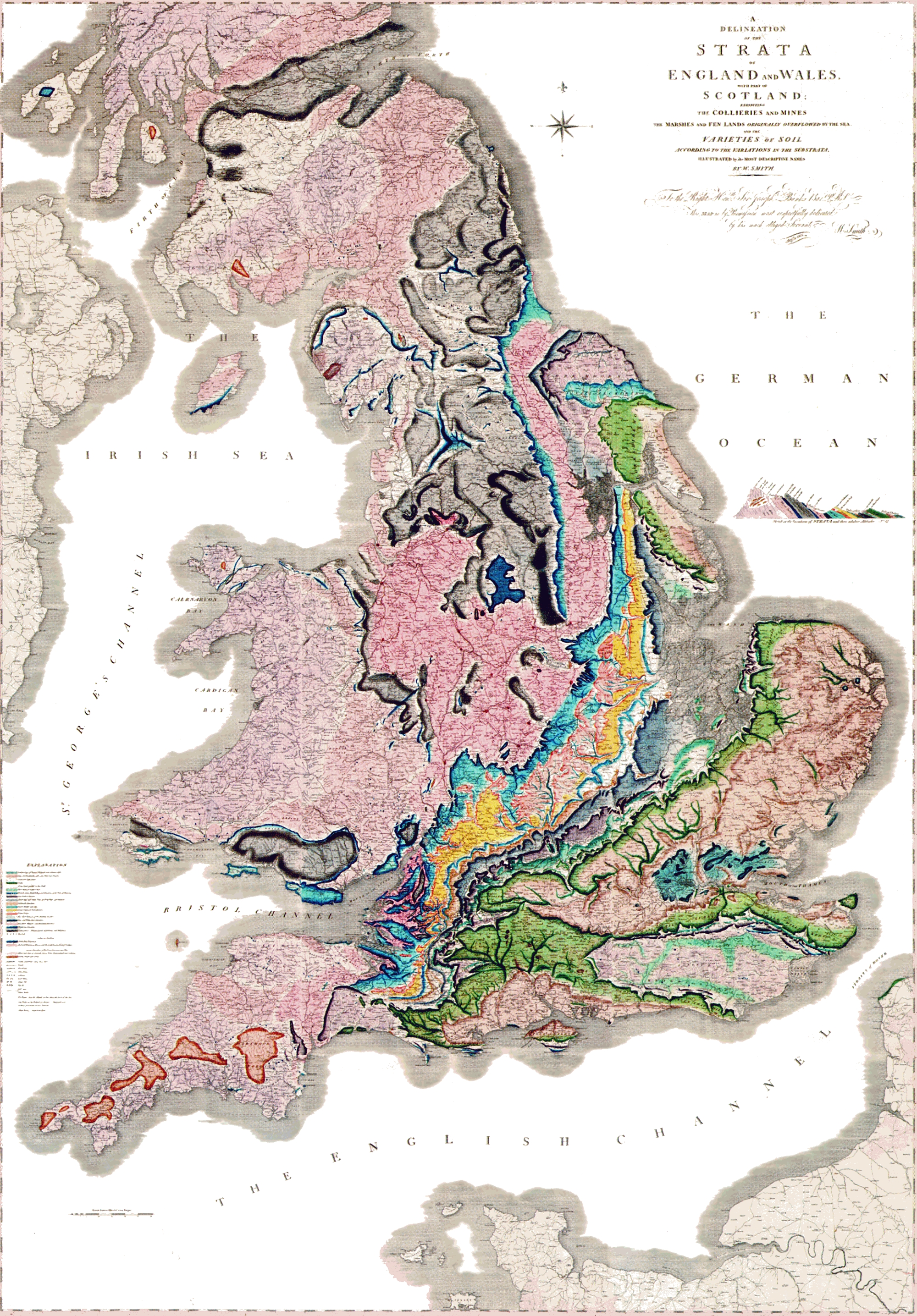
After a few less-than provocative questions, Simon Winchester took a seat for some book signing.  Now, when I saw him at a reading at Washington, D.C.’s Politics and Prose bookstore several years ago, I mentioned to him that while in London I had actually seen the subject of the book, The Map That Changed the World—William Smith’s 1815 geologic map of Great Britain.  It was a good talking point then, but … now I had no in. 

However, besides the copy of Atlantic I bought that night, I also carried with me a copy of Krakatoa—in which Mr. Winchester chronicles the 1883 eruption, geologic origins, and historical impact of this infamous Indonesian volcano.  Within a chapter on an Islamic uprising in Java in the wake of the eruption (and perhaps even initiated by the resulting turmoil), Winchester mentions the story of Eduard Douwes Dekker (no relation; none of my grandmothers were Dutch).  As a colonial official in the Dutch East Indies of the 1850s, Dekker witnessed administrative corruption—in both the personalities involved and in the bureaucratic system itself.  But the actual abuse and mistreatment of the natives compelled him to confront his bosses and, ultimately, to write a novel.  Dekker’s Max Havelaar, with it meta-narrative structure and overt autobiographical nature, portrays what he’d seen in just three months assisting the administration of coffee plantations not far from the island that would explode decades later.  His book was controversial of course, especially as it exposed the cruelties of the colonial system to an ignorant (perhaps willfully) Dutch public.  Needless to say, Dekker did not become popular in Holland, though he did become one of the nation’s best writers.  And eventually, Max Havelaar prompted the Dutch government to reform its colonial polices—initiatives that eventually led to Indonesian independence (which actually took until after World War II), as well as the Fair Trade movement

Now, Simon Winchester devotes all of three pages to this story (which is a lot considering the density of information packed into his books).  But I saw the potential for an entire book based on those three pages—an account of Dekker’s life, experience in Java, and influential novel.  And so, I read Max Havelaar, learned more about its author, and even laid out a rough outline.  And then somewhere in there I lost the will to put any effort into the project.  This is not the first time this has happened.  (If I ever mentioned either the Warsaw Ghetto Uprising or anything about RFK to you, these projects, just for the record, are in the same state of incompletion.)  But, how often would I have the opportunity to ask the very person who inspired me for his thoughts on the project?  So, I did.  I mentioned my fascination with Dekker’s story, and he told me that since time and place did not allow for a proper discussion, I should send him an email.   I thanked him, and left with signed books and an email to write.

In that email, I thanked for the signatures and laid out my project proposal—mentioning that my research was only preliminary and my intended audience: cool, young adults  who are into being inspired to action by historical figures and their tales of creativity and self-sacrifice in order to stand up for what is right.  Perhaps that’s a tad specific, but why write for someone else?  And I concluded by seeking out any research leads, or even just recommendations on how a modern historian should approach/consider this era and region.  And with that, I sent off my note to a rather busy man. 

But a man of his word, as it turns out.  He told me he responds to nearly every email that comes to him through his website, and I received a reply a just a couple days later:

It seems an admirable, fascinating - but perhaps not financially terribly rewarding  - idea; and I for one would love to read such a book.

I have a friend in Leiden who is familiar with the subject and might provide some leads; and one has to assume there is a biography in Dutch, so its author, if around, would surely help you too.

But the decision you alone must make is: is it worthwhile? On all levels, that is; not just monetary. You just might find the whole thing so spiritually and intellectually fulfilling as to trump the financial risk.

Do let me know what you decide,

Simon W.

Terribly exciting, right?  The only thing that baffles me is why I haven’t jumped right into this project.  I mean, if Simon Winchester is my audience—then why not just go write it?  I don't know why, but I haven't.  I don't know why.  I don't know.